
Hormone Delivery Methods Compared: Pellets, Injections, Creams and Patches
Same Hormone, Different Delivery
Once you and your provider decide hormone therapy is right for you, the next question is how to take it. The hormone may be the same, but the delivery method affects convenience, stability of levels, side effects and cost.
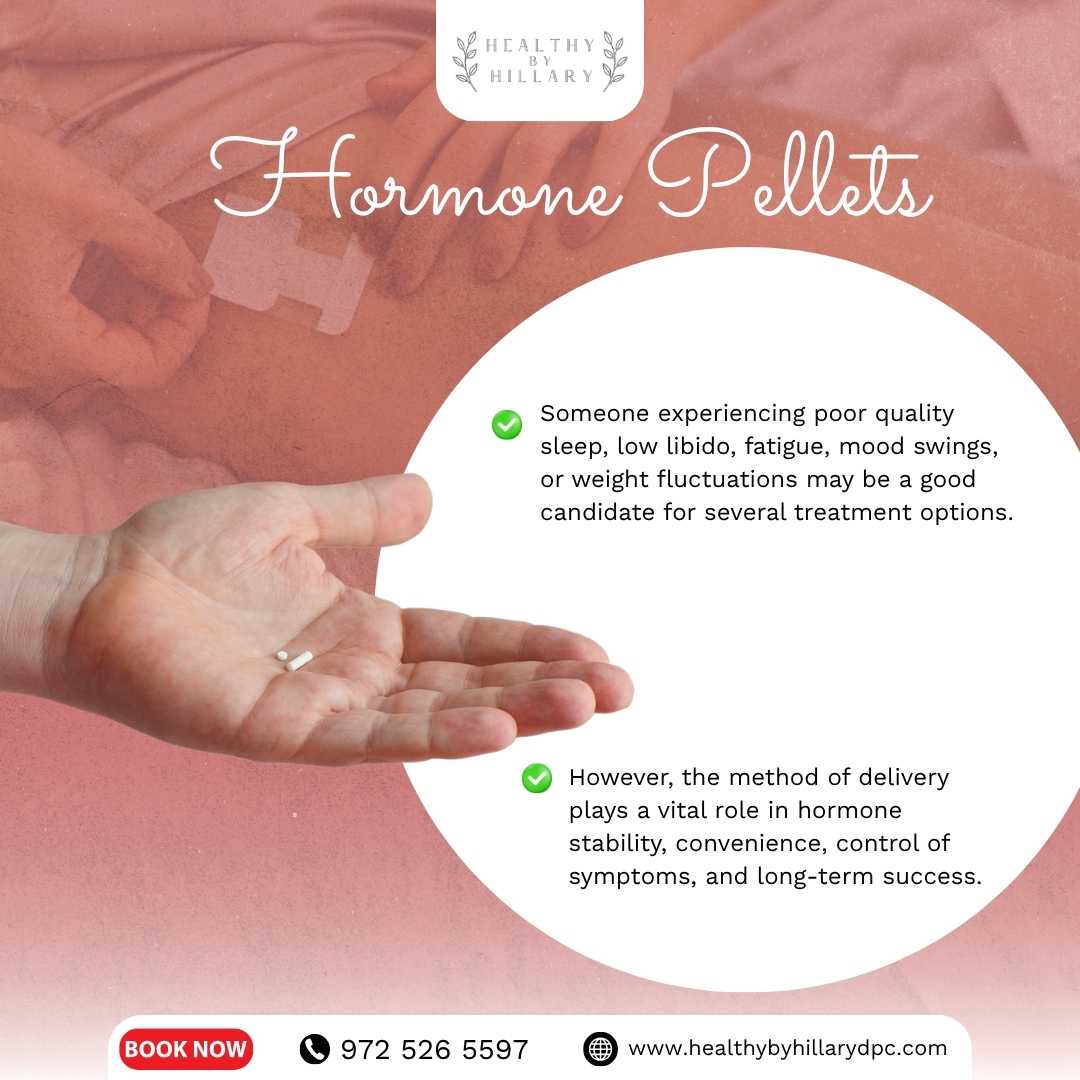
Pellets
Small implants placed under the skin every three to six months.
- Pros: no daily routine, steady release
- Cons: hard to adjust once placed, minor procedure, compounded estradiol pellets not FDA-approved
Injections
Most often used for testosterone, given weekly or every one to two weeks.
- Pros: inexpensive, effective, easy to adjust
- Cons: peaks and dips between doses, needles
Creams and Gels
Applied daily to the skin.
- Pros: steady levels, easy adjustments
- Cons: daily routine, risk of transfer to partners or children
Patches
Changed once or twice weekly.
- Pros: steady levels, FDA-approved estradiol options
- Cons: skin irritation, may fall off
Oral Options
Pills such as micronized progesterone and some estrogens.
- Pros: simple
- Cons: oral estrogen carries higher clot risk than skin-based forms
How to Choose
Consider lifestyle, comfort with needles, budget, skin sensitivity and how important fine-tuning is. Many patients start with an adjustable method, then switch once their dose is established. A Cleveland Clinic resource explains hormone therapy options. Read our guide to hormone pellet therapy.
Delivery Questions
Which method works fastest?
Injections and gels act quickly; pellets build over weeks.
Which is most affordable?
Injections are usually least expensive.
Can I switch methods?
Yes, with guidance from your provider.
Which Methods Suit Women
Women commonly use estradiol patches, gels or sprays for systemic symptoms, micronized progesterone capsules to protect the uterus, and low-dose vaginal estrogen for local symptoms. Pellets are an option for women who prefer not to manage daily or weekly routines. Low-dose testosterone, when used for low libido, is usually given as a cream or gel at a fraction of the male dose, or occasionally as a pellet.

Which Methods Suit Men
Men with confirmed low testosterone most often use injections or gels. Injections are affordable and effective, and smaller, more frequent doses can smooth out peaks and dips. Gels provide steady daily levels. Pellets offer the convenience of a few procedures a year. Each requires monitoring of testosterone levels, blood counts and PSA.
Side Effects by Method
Injections may cause soreness at the injection site and fluctuating mood or energy between doses. Gels and creams can irritate the skin and require precautions to avoid transfer. Patches may cause redness or itching. Pellets can cause bruising, infection or extrusion and cannot be easily removed if levels run high.
Questions to Ask Your Provider
- Which method gives me the steadiest levels?
- How easily can my dose be adjusted?
- What monitoring will I need?
- What will each method cost over a year?
- Can I try one method and switch later?
More Questions
Do pellets work better than injections?
Not necessarily; they differ mainly in convenience and adjustability.
Is one method safer?
Each has its own risk profile; skin-based estrogen has lower clot risk than oral estrogen.
Find Your Best Fit
Our team helps you choose the delivery method that suits your life. Book a consultation today.