
Peptides for Younger-Looking Skin: Topical, Oral and In-Office Options
Why Skin Ages
Skin aging comes from two main sources. Intrinsic aging is the natural, gradual decline in collagen, elastin and hyaluronic acid that begins in our twenties. Extrinsic aging comes from outside factors, mostly sun exposure, along with smoking, pollution, poor sleep and stress. Together they lead to fine lines, sagging, dullness, uneven tone and thinner skin.
Peptides have become popular because they can send signals that encourage skin to behave more like younger skin. They are gentle, pair well with other ingredients and suit many skin types.
Types of Skin Peptides
Collagen-signaling peptides
These tell skin cells to produce more collagen and elastin. Palmitoyl pentapeptide-4 is one of the best-studied examples, with small trials showing improvements in fine lines and texture.
Copper-carrying peptides
Copper peptides deliver trace minerals that support wound healing and collagen production. Read more in our guide to copper peptides.
Neurotransmitter-inhibiting peptides
Peptides like acetyl hexapeptide-8 are designed to soften expression lines by reducing muscle signaling in the skin. Effects are mild compared with injectable neuromodulators.
Enzyme-inhibiting peptides
These help slow the breakdown of existing collagen.
Oral Collagen Peptides
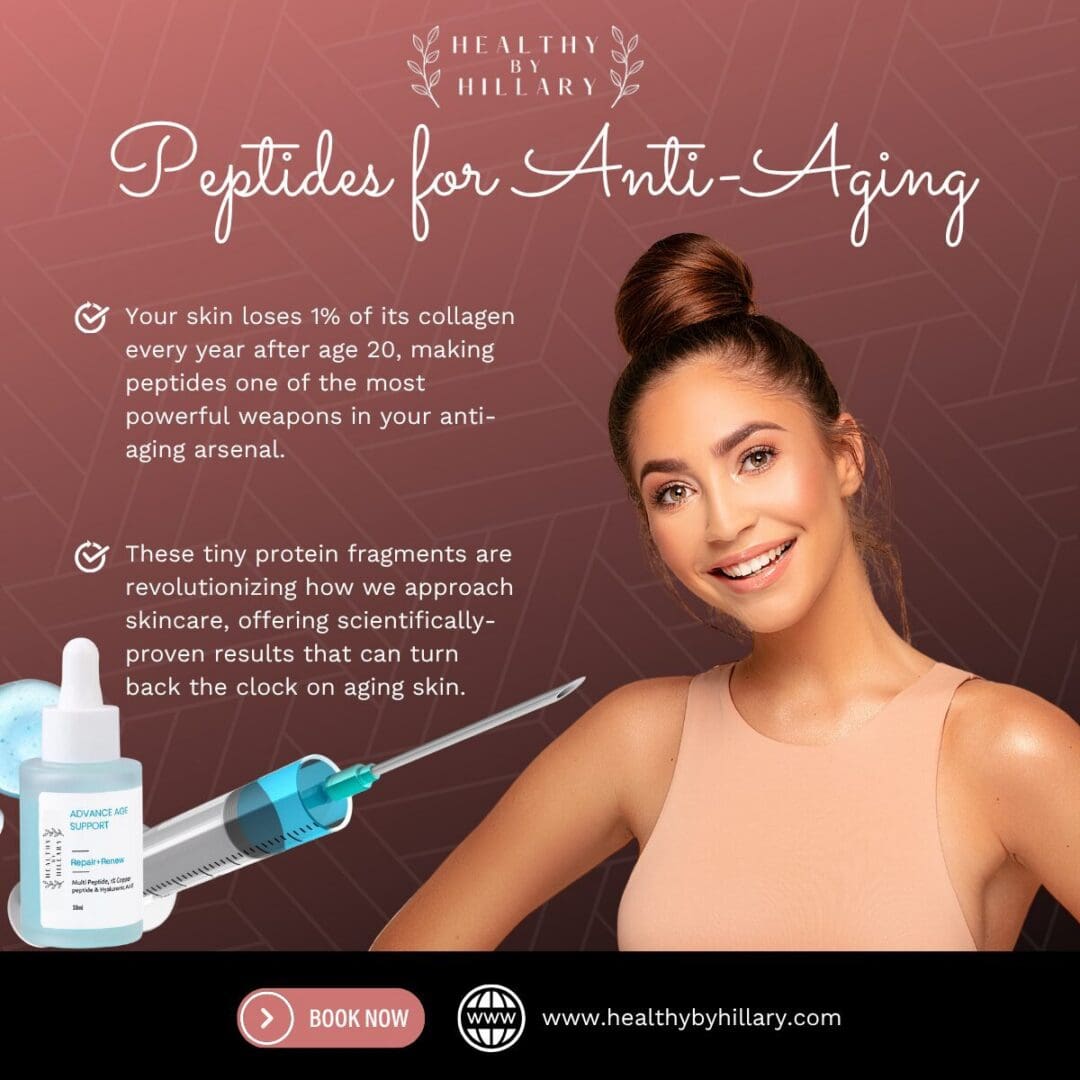
Collagen supplements are made from hydrolyzed collagen, broken into small peptides that the body absorbs. Several studies suggest they may improve skin hydration and elasticity over two to three months. Results are modest but consistent in some research. Choose products from reputable manufacturers with third-party testing.
In-Office Treatments That Pair Well
Peptides work on the surface and upper layers of the skin. Professional treatments can reach deeper and amplify results:
- Microneedling: creates tiny channels that stimulate collagen and help serums penetrate
- PRP facials: use growth factors from your own blood to boost renewal; see our PRP facial guide
- Chemical peels: improve texture and tone
- Radiofrequency: tightens skin by heating deeper layers
- Fillers and neuromodulators: address volume loss and expression lines
Building an Anti-Aging Routine
Morning
- Gentle cleanser
- Antioxidant serum such as vitamin C
- Peptide serum or moisturizer
- Broad-spectrum sunscreen SPF 30 or higher
Evening
- Cleanser
- Retinoid two to four nights a week
- Peptide serum on alternate nights or layered if tolerated
- Rich moisturizer
Sunscreen is the single most important anti-aging product. Without it, other ingredients cannot keep up with ongoing sun damage.
What Results to Expect
Peptides deliver gradual improvements. Expect smoother texture and better hydration within four to six weeks and softer fine lines over two to three months. They will not replace fillers for volume loss or neuromodulators for deep expression lines, but they can improve overall skin quality and support professional treatments.
Who Benefits Most
- People in their thirties and forties noticing early fine lines
- Those with sensitive skin who cannot tolerate strong retinoids
- Anyone wanting to maintain results from in-office treatments
- People looking for gentle, well-tolerated anti-aging care
Choosing Products Wisely
Look for peptides listed near the top of the ingredient list, products in opaque or airless packaging, and brands that share testing data. Be cautious of extreme claims. A consumer summary of peptides can help you understand ingredient labels.
Lifestyle Habits for Healthy Skin
- Sleep seven to nine hours
- Avoid smoking
- Eat protein and colorful vegetables
- Stay hydrated
- Manage stress
- Protect skin from the sun year-round
Skin Peptide Questions
Can peptides replace retinol?
They are gentler but less potent. Many people use both for the best results.
Are peptides safe during pregnancy?
Topical peptides are generally considered low risk, but confirm with your provider.
How long should I use a product before judging it?
Give it at least eight to twelve weeks.
Do peptides work for all skin types?
Yes, most people tolerate them well.
Get a Personalized Skin Plan
Our aesthetics team can evaluate your skin and design a routine and treatment plan that brings out its best. Book a skin consultation today.