
Bioidentical Hormones Explained: How They Work and Who They Help
What “Bioidentical” Really Means
The word bioidentical gets used a lot in wellness marketing, so it helps to start with a clear definition. A bioidentical hormone has exactly the same molecular structure as a hormone your body makes on its own. The most common examples are estradiol, progesterone and testosterone.
Because the shape matches, these hormones fit the body’s receptors the same way natural hormones do. They are usually made in a lab from plant compounds, often from yams or soy, and then processed into the final form. The plant source is not what makes them bioidentical. The final molecule is.
Many bioidentical hormones are available as FDA-approved prescriptions, such as estradiol patches and gels and micronized progesterone capsules. Others are custom-made by compounding pharmacies when a patient needs a dose or form that is not commercially available. Both routes are used in practice, and your provider can explain which fits your situation.
Why Hormone Levels Drop
Hormones act as messengers that control energy, mood, sleep, metabolism, bone strength and sexual function. Levels naturally decline with age.
In women, estrogen and progesterone fall unevenly during perimenopause and then drop sharply after menopause. In men, testosterone tends to decline gradually, about one percent a year after age 30 or 40. Stress, surgery, certain medications, weight gain and chronic illness can speed up the process for both sexes.
Symptoms That Bring People In
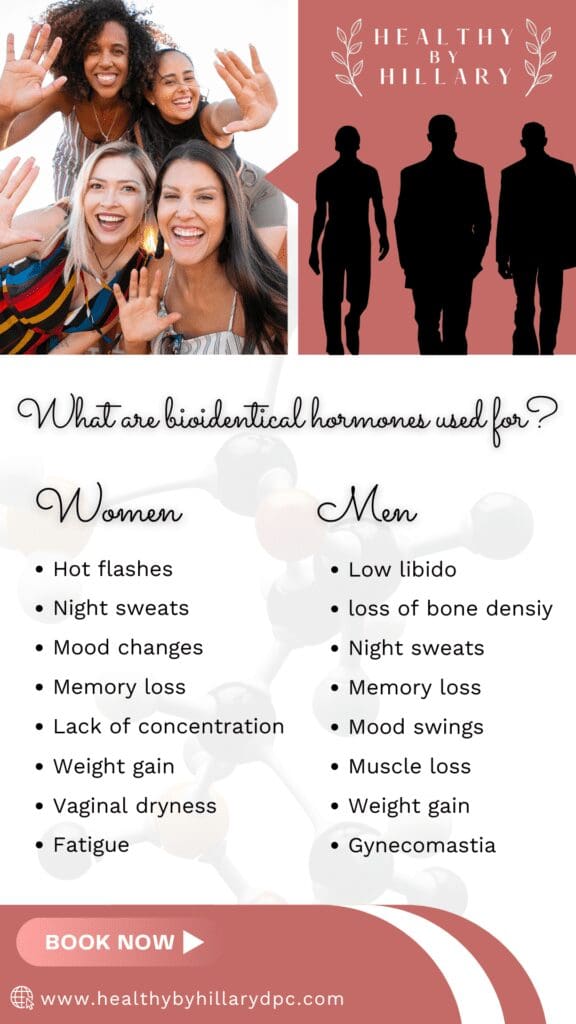
Common concerns for women
- Hot flashes and night sweats
- Trouble falling or staying asleep
- Mood swings, irritability or low mood
- Vaginal dryness and painful intercourse
- Lower sex drive
- Brain fog and forgetfulness
- Weight gain around the midsection
Common concerns for men
- Low energy and fatigue
- Reduced muscle mass and strength
- Lower libido or erectile changes
- Increased belly fat
- Low motivation or a flat mood
These symptoms overlap with thyroid disease, sleep apnea, depression and anemia. That is why testing and a careful history matter before any hormone is prescribed.
How BHRT Is Delivered
Bioidentical hormones come in several forms. The right one depends on your symptoms, your preferences and your medical history.
- Creams and gels: applied to the skin daily, easy to adjust
- Patches: changed once or twice a week, provide steady levels
- Oral capsules: commonly used for progesterone, which can also help sleep
- Injections: often used for testosterone, given weekly or every few weeks
- Pellets: tiny implants placed under the skin that release hormone slowly for three to six months
- Vaginal products: low-dose estrogen for dryness and urinary symptoms
Skin-based estrogen is often preferred for women at higher risk of blood clots because it bypasses the liver.
Proven Uses of Hormone Therapy
Research supports hormone therapy for several specific purposes. It is the most effective treatment available for hot flashes and night sweats. It reliably eases vaginal dryness and related discomfort. It helps prevent bone loss and reduces fracture risk in women after menopause. For men with confirmed low testosterone, therapy can improve libido, energy, mood and muscle mass.
Many patients also report better sleep, steadier mood and sharper focus once their levels are balanced, as outlined in this review of hormone therapy.
Understanding the Risks
No treatment is risk-free. For women, estrogen without progesterone raises the risk of uterine cancer, so women with a uterus need both. Combined therapy taken for many years may slightly raise breast cancer risk. Oral estrogen can raise clot and stroke risk, especially in women over 60 or more than ten years past menopause.
For men, testosterone can raise red blood cell counts, affect fertility and may worsen untreated sleep apnea. Regular labs catch these issues early.
Lifestyle Still Matters
Hormones work best on a solid foundation. Regular strength training helps protect bone and muscle as hormone levels change. A diet with enough protein, calcium and vitamin D supports bone health. Limiting alcohol reduces hot flashes and sleep disruption for many women. Managing stress and keeping a steady sleep schedule help the brain adjust to new hormone levels. Patients who pair therapy with these habits usually report the most noticeable and lasting improvements.

How We Personalize BHRT
A good plan starts with a full picture. At our clinic, that usually includes:
- A detailed symptom and health history
- Comprehensive hormone testing along with thyroid, metabolic and blood count labs
- A discussion of delivery options and goals
- Starting at the lowest effective dose
- Follow-up labs and symptom checks every few months at first, then at least yearly
Adjustments are normal. It often takes a few rounds of fine-tuning to find the dose that feels right.
Questions Patients Ask About Bioidentical Hormones
Are compounded bioidentical hormones safer than standard ones?
Not necessarily. The hormone molecule is the same, so the risks are similar. Compounded products are not FDA-approved and can vary from batch to batch, which is why many providers use approved bioidentical products when they fit and reserve compounding for special needs.
How long can I stay on BHRT?
There is no fixed cutoff. Many women continue as long as benefits outweigh risks, with a yearly review of dose and health status. Some gradually reduce their dose over time, while others stay on a low dose for bone or symptom protection.
Will BHRT help me lose weight?
Hormones alone are not a weight loss treatment. However, better sleep, more energy and improved mood often make it easier to stay active and eat well. Some people combine hormone care with a structured weight program.
Do I need blood tests before starting?
Testing is helpful, especially for men considering testosterone. For women in perimenopause, symptoms often guide treatment more than lab values, but baseline labs help rule out other causes and give a reference point for follow-up.
Is BHRT a Good Fit for You?
If hormone-related symptoms are affecting your sleep, relationships, work or confidence, an evaluation is a reasonable next step. We offer bioidentical hormone therapy for women and men. Book a consultation to talk through your symptoms, testing and options.